Hemp oil and CBD oil: what is the difference
Two different things from one plant, with almost the same name on the label.
Hemp seed oil and CBD oil come from one plant and from two different ends of it. The seeds are cold-pressed and give a food oil with no cannabidiol. The flower and leaf are extracted and give an oil in which cannabidiol is the main ingredient. Both are frequently labelled “hemp oil”, and the price between them differs tenfold.
| Hemp seed oil | CBD oil | |
|---|---|---|
| Which part | Seeds | Flower and leaf |
| How it is made | Cold pressing | Extraction (CO₂ or ethanol) |
| Cannabidiol | None (traces) | Main ingredient, measured |
| How it is measured | Volume in ml | Milligrams and percentage |
| Usual pack | 100–500 ml | 10–30 ml |
| INCI name | Cannabis Sativa Seed Oil | Cannabidiol |
| EU legal status | Ordinary food | Novel food, transitional |
What hemp seed oil is
It is a plant oil pressed from the seeds of industrial hemp, the same way sunflower or linseed oil is made. There are practically no cannabinoids in seeds: they form in the glands of the flower, not in the seed. In the finished oil cannabidiol appears only as a trace of contamination from handling.
It is sold in pharmacies and food shops, usually in 100 to 500 ml bottles, and used as a food oil or a cosmetic base. In an INCI list it appears as Cannabis Sativa Seed Oil. Its price is comparable to other cold-pressed oils.
What CBD oil is
CBD oil is an extract from flower and leaf, diluted in a carrier oil — most often hemp seed, coconut or olive. So seed oil is frequently present in CBD oil too, but as the carrier rather than the active ingredient. The cannabidiol content is declared in milligrams for the whole bottle or as a percentage.
The bottle is small — 10 or 30 ml — and always has a dropper, because it is dosed by the drop. Percentage and milligrams are one figure in two forms: 10% in a 10 ml bottle means 1000 mg of cannabidiol.
How to tell them apart on the label
- Look for “cannabidiol” or “CBD” in the composition, not in the product name. The name is marketing; the composition is a declaration.
- Look for a figure — milligrams or a percentage. Seed oil is measured in millilitres, CBD oil in milligrams.
- Look at the volume. 250 ml at the price of a 10 ml bottle is seed oil.
- Look for a batch lab report. For CBD oil that is the norm; for a food seed oil such a report has no purpose.
- In cosmetics read the INCI: Cannabis Sativa Seed Oil is the seed oil, Cannabidiol is cannabidiol itself.
What the lab report shows
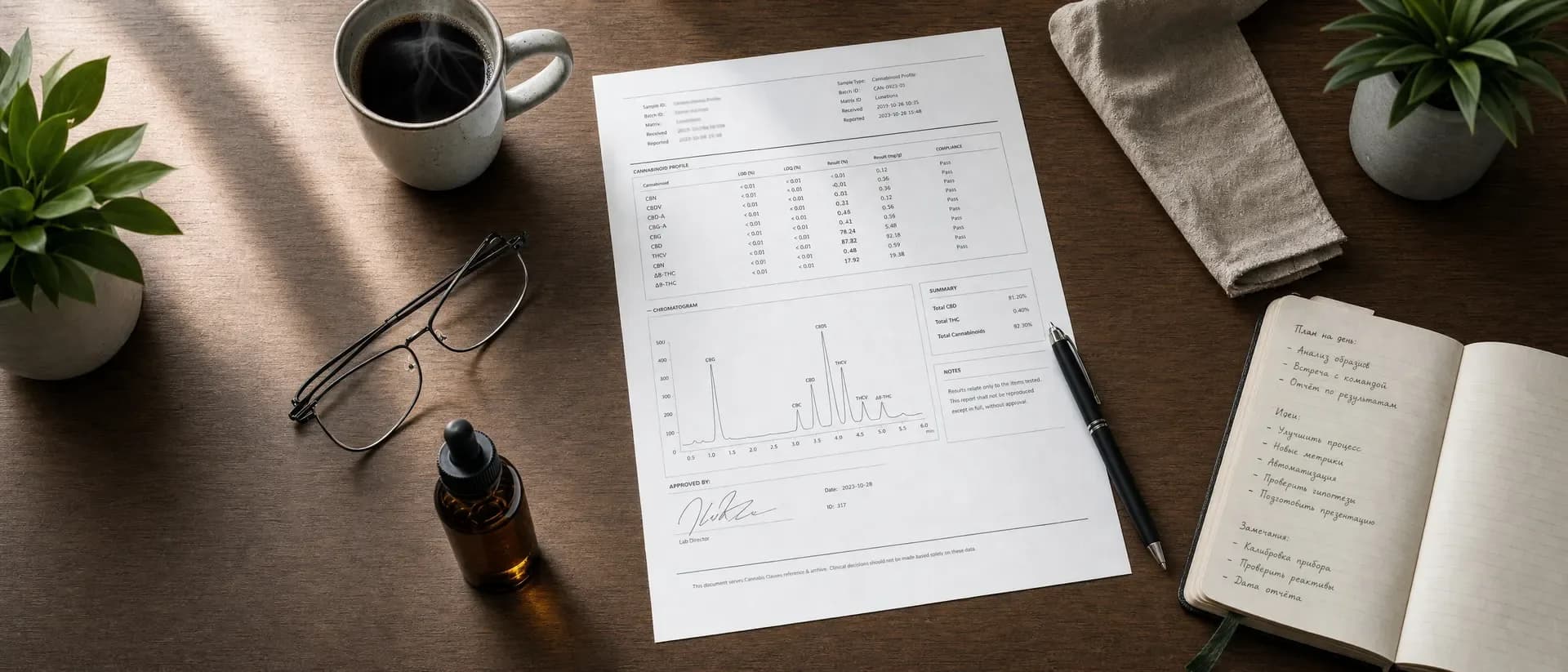
A batch report (COA) is a table of measured amounts. For CBD oil it has a CBD line with a value, lines for the minor cannabinoids CBG, CBN and CBC, and a separate THC line. The batch number on the report must match the bottle, and the date should be close to it.
If a seller offers “hemp oil” with no report, that is not necessarily wrong: a cannabinoid analysis of a food seed oil serves no purpose. What is wrong is the absence of a report where the label declares cannabidiol.
Why price is compared only in milligrams
The two do not compare on price per bottle, because they do not sell the same thing. In CBD oil you pay for milligrams of cannabidiol: the bottle price divided by the milligrams in it gives price per milligram — the only figure by which two CBD oils compare honestly.
An example: a 10 ml bottle with 1000 mg at 30 euro works out at 3 cents a milligram; a 10 ml bottle with 2000 mg at 55 euro works out at 2.75. The second is dearer per bottle and cheaper in substance. For seed oil that sum does not exist — there you pay for volume.
The legal status of the two in the EU
Hemp seed oil counts as an ordinary food and is sold freely. Extracted cannabidiol sits in another category: the European Commission lists it in the novel food catalogue, and the European Food Safety Authority keeps its safety assessment open, naming a provisional reference of 2 mg a day. The industrial hemp both are made from carries a THC threshold below 0.3% under Regulation (EU) 2021/2115.
“Hemp oil to drink” — which of the two
The phrase is used for both products and means different things. Hemp seed oil is drunk or added to food like any food oil — by the teaspoon, in a salad, in a smoothie. It is not heated for frying: its smoke point is low and high heat breaks it down.
CBD oil is not taken by the spoon. It is dosed by the drop, and the usual route is sublingual — the drops are held under the tongue for about a minute, then swallowed. The bottle is shaken before use, because the extract separates in the carrier oil.
Hence the practical difference in how long each lasts: 250 ml of seed oil goes in weeks of cooking, and 10 ml of CBD oil goes in weeks of a few drops a day. The two numbers look comparable and are not.
Capsules: the names diverge there too
“Hemp oil capsules” in pharmacies usually means capsules of seed oil — a food supplement for the fatty acids, with no cannabidiol. “CBD capsules” or “cannabis oil capsules” means extract in a ready dose, with declared milligrams of cannabidiol per capsule.
The check is the same and takes seconds: an extract pack always states how many milligrams of cannabidiol are in one capsule. If it states only how many milligrams the oil itself weighs, that is seed oil and the figure describes the weight of the capsule.
Which of the two you need
If you want a plant oil for food or as a cosmetic base, the product is hemp seed oil and the comparison is by volume, origin and pressing method. If you want cannabidiol, the product is the extract and the comparison is by milligrams, spectrum and the batch lab report.
The two do not substitute for each other and do not compare on price. All they share is the plant and — often — the fact that the extract is diluted in hemp seed oil.
- Cannabidiol (CBD)
- A cannabinoid from the flower and leaf of hemp. Not psychoactive by the WHO definition of 2018.
- Hemp seed oil
- A plant oil from the seeds. Contains no cannabidiol; in INCI, Cannabis Sativa Seed Oil.
- Carrier oil
- The oil the extract is diluted in: hemp seed, MCT from coconut, or olive.
- Novel food
- A legal category for foods without significant EU use before May 1997. Extracted cannabidiol is in it.
- COA
- A lab report for a specific batch with measured cannabinoid amounts.
Frequently asked questions
Quick answersDoes hemp oil contain CBD?
Hemp seed oil does not, beyond a trace of contamination from handling. Cannabinoids form in the flower, not the seed. If the label declares cannabidiol, the product is an extract, not seed oil.
Why is hemp oil in the pharmacy so much cheaper?
Because it is usually seed oil, made with a press and sold in 100–500 ml bottles. CBD oil is an extract, measured in milligrams, and comes in a 10–30 ml bottle.
Are cannabis oil and CBD oil the same?
In shops “cannabis oil” most often means the same cannabidiol extract. The name is not standardised, so the check stays the same: is cannabidiol declared and is there a figure in milligrams.
Can seed oil be used instead of CBD oil?
They are different products with different compositions. Seed oil is a food oil; CBD oil is bought for the measured amount of cannabidiol in it.
What does “full spectrum” mean on a CBD oil?
That the extract keeps the other cannabinoids and terpenes, along with a trace of THC below the threshold. Broad spectrum is the same without detectable THC; isolate is cannabidiol alone.
How do I tell whether a cream contains cannabidiol?
From the INCI list on the pack. Cannabis Sativa Seed Oil is the seed oil; if Cannabidiol is not there, the product contains no cannabidiol.
Continue learning
Sources & references
Every factual statement above rests on the documents listed. Check them yourself.
- European Commission Novel Food Catalogue — Cannabis sativa L.https://ec.europa.eu/food/food-feed-portal/screen/novel-food-catalogue/search
- EFSA — cannabidiol novel food evaluations on holdhttps://www.efsa.europa.eu/en/news/cannabidiol-novel-food-evaluations-hold-pending-new-data
- Regulation (EU) 2021/2115 — THC threshold for industrial hemphttps://eur-lex.europa.eu/legal-content/EN/TXT/?uri=CELEX%3A32021R2115
- CosIng — European Commission database of cosmetic ingredients (INCI)https://ec.europa.eu/growth/tools-databases/cosing/
- WHO Expert Committee on Drug Dependence — Cannabidiol critical review (2018)https://www.who.int/publications/i/item/WHO-CND-2018-CBD